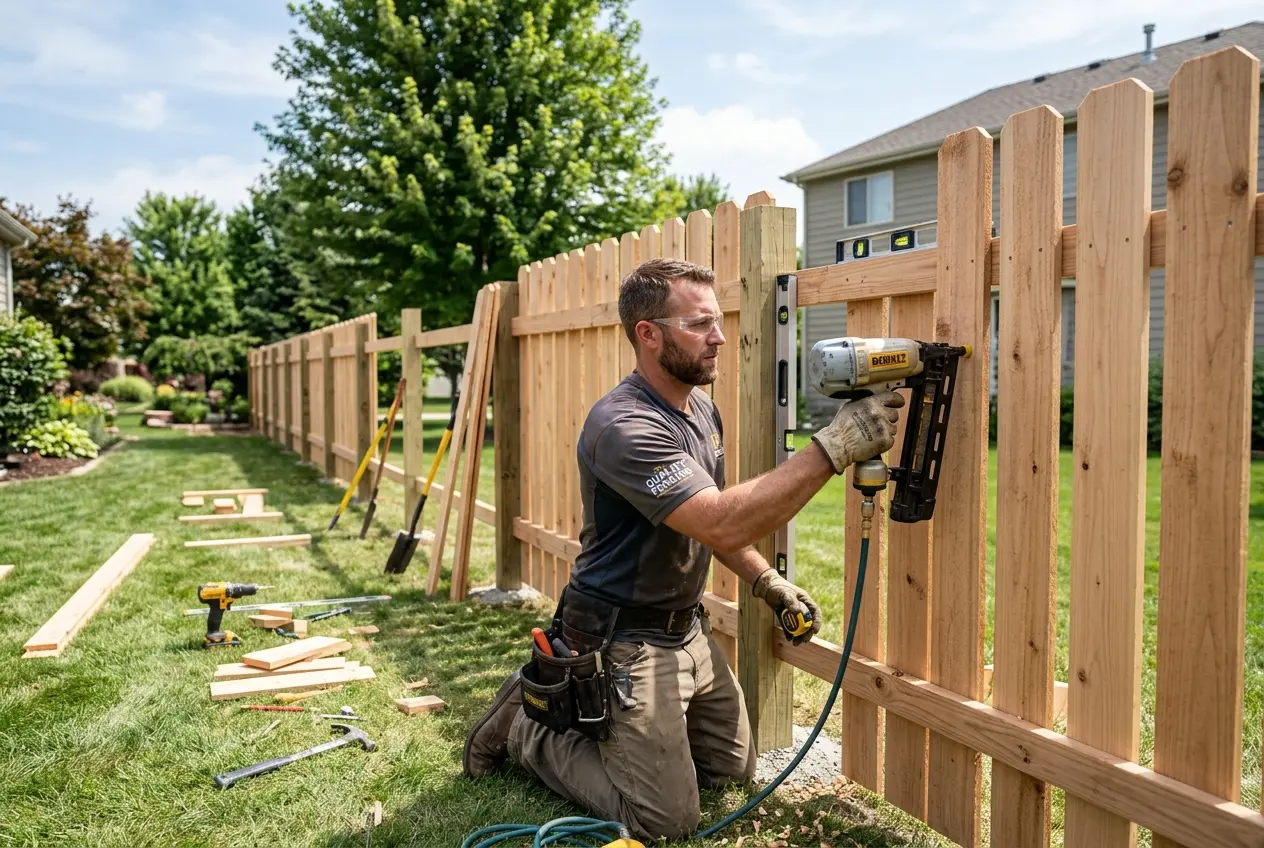
Our wood fences use premium cedar or redwood treated specifically for Central Texas' humidity swings. Unlike big-box store materials, we source from suppliers who kiln-dry lumber to prevent warping in our summer heat.
For historic homes in Alamo Heights, we replicate traditional picket styles with modern rot-resistant treatments. In newer northside developments, we build horizontal slat fences that complement contemporary architecture while providing airflow.
Every installation includes limestone-compatible post-setting techniques—critical in Boerne and New Braunfels where rocky soil challenges cheaper methods.
For historic homes in Alamo Heights, we replicate traditional picket styles with modern rot-resistant treatments. In newer northside developments, we build horizontal slat fences that complement contemporary architecture while providing airflow.
Every installation includes limestone-compatible post-setting techniques—critical in Boerne and New Braunfels where rocky soil challenges cheaper methods.
Our Process
- 01 Step 1: Site assessment checking for limestone bedrock and drainage patterns
- 02 Step 2: Custom treatment selection based on sun exposure and neighborhood aesthetic
- 03 Step 3: Precision installation with expansion gaps for summer wood movement
- 04 Step 4: Final sealing with UV-protective stain chosen for your microclimate
Benefits
- Warp-resistant construction
- Hill country moisture protection
- Period-appropriate designs
- 5-year material warranty
Frequently Asked Questions
How often will my wood fence need staining in San Antonio?
Most properties need re-staining every 3-4 years. South-facing fences in full sun may require it every 2 years—we'll advise based on your specific exposure.
Do you use pressure-treated pine?
Only for structural components in ground contact. For visible surfaces, we prefer naturally rot-resistant cedar that withstands our humidity without chemical treatments.